The Democratic Education Framework
What is the Democratic Education Framework?
The Democratic Education Framework is a practical tool for teachers, educators and youth practitioners working with children and young people aged 4–25.
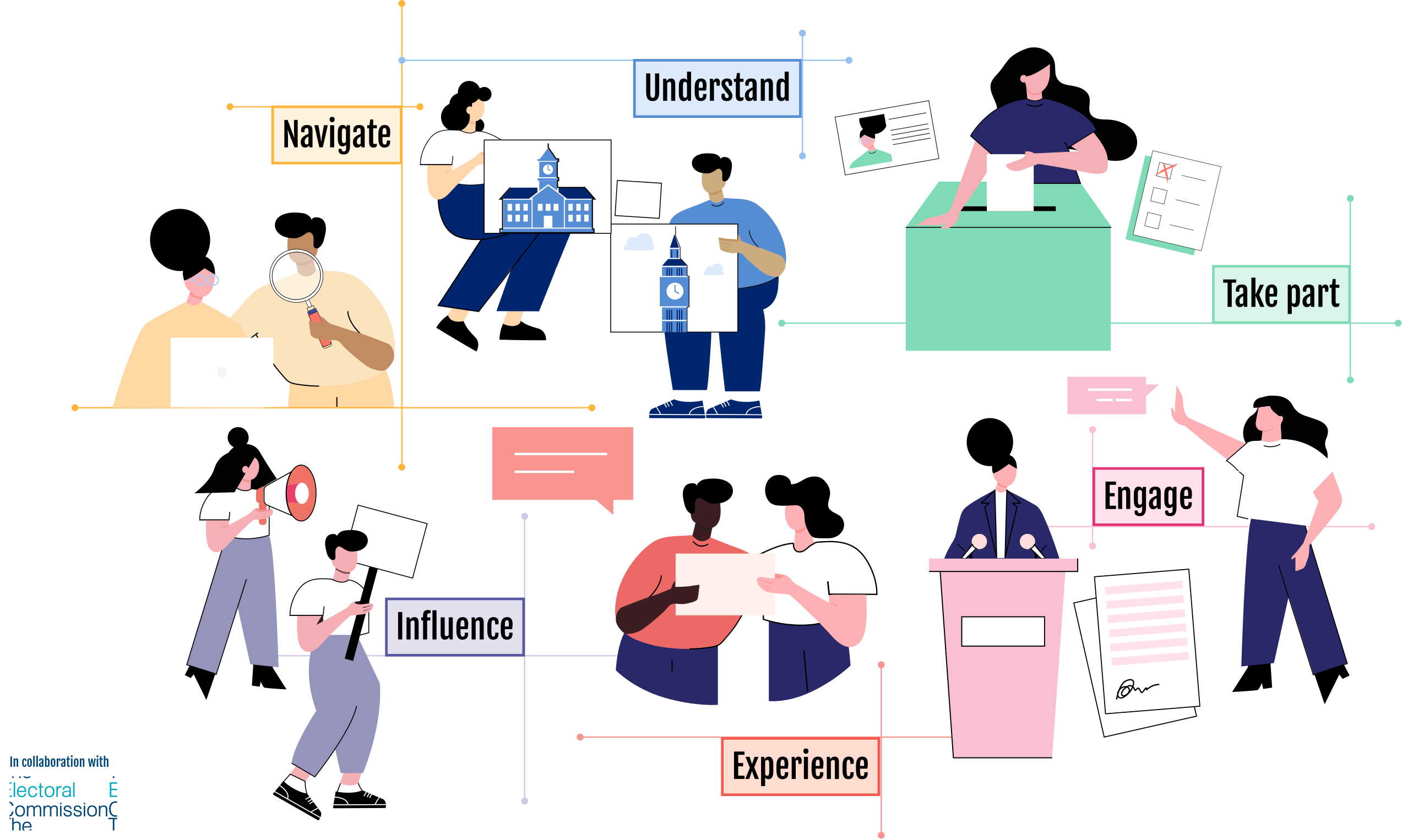
It helps you reflect on the democratic education already taking place in your setting, recognise what is working well and identify opportunities to strengthen your practice. Its six interconnected strands provide a shared picture of high-quality impartial democratic education, supporting young people to understand how democracy works, why it matters, why their voice counts and how they can participate.
The framework is not a prescribed curriculum or a checklist. It is designed to be flexible, so you can use it in ways that suit your learners, your setting and your existing priorities, whether you work in a school, college or youth organisation.
The framework does not favour particular political views, parties, candidates, policies or outcomes, or seek to influence how young people vote. Its purpose is to help young people develop the knowledge, skills and confidence to consider different perspectives, think critically and make up their own minds.
Currently designed for use in England and Northern Ireland, the framework reflects the curriculum and education contexts in both nations. It was developed by the Electoral Commission, The Politics Project with more than 100 partners and practitioners to ensure it is relevant, practical and adaptable. We plan to extend it to Scotland and Wales in the future.
Use our self-assessment tool to find out how you're doing
Get a clear snapshot of your strengths and areas for improvement across the six strands.
Designed for schools and youth settings, the tool will guide you to tailored resources and support to strengthen young people’s engagement with democracy.
View and download the Framework
Loading...
Case studies
Our case studies show how others have helped young people engage in democracy, from speaking directly with their elected representatives to building their media literacy.
Heading
Lorem ipsum dolor sit amet, consectetur adipiscing elit, sed do eiusmod tempor incididunt ut labore et dolore magna aliqua. Ut enim ad minim veniam, quis nostrud exercitation ullamco laboris nisi ut aliquip ex ea commodo consequat. Duis aute irure dolor in reprehenderit in voluptate velit esse cillum dolore eu fugiat nulla pariatur


Loading...
Delivery pathways
Developed by expert teachers and practitioners, our delivery pathways give practical advice and resources for working with young people in a range of age groups and settings.
Heading
Lorem ipsum dolor sit amet, consectetur adipiscing elit, sed do eiusmod tempor incididunt ut labore et dolore magna aliqua. Ut enim ad minim veniam, quis nostrud exercitation ullamco laboris nisi ut aliquip ex ea commodo consequat. Duis aute irure dolor in reprehenderit in voluptate velit esse cillum dolore eu fugiat nulla pariatur
See more about the strands
Navigate
Issues, Media and Information
What it covers
Young people will build skills to find, understand and question news and information. They’ll learn how to spot misinformation and think critically about what they see and hear.
Key topics
- Social and political issues
- Misinformation, disinformation and fact checking
- News sources, media and bias
- Social media and algorithms
Understand
Democratic Structures and Institutions
What it covers
Young people will learn how decisions are made in the UK, from local councils to UK Parliament, and how laws are created. This helps them understand how the system works and where power sits.
Key topics
- The history and development of democracy
- Local, regional, devolved and UK government
- Electoral systems and democratic processes
- How laws and policies are made
Take part
Elections and Voting
What it covers
Young people will understand why voting matters and how elections work, so they can feel confident to take part and make up their own minds about who to vote for. This includes knowing how to register and the different ways you can vote.
Key topics
- Why voting matters
- Representation and who can vote
- Political parties, candidates, manifestos and election campaigns
- How voting and elections work
Engage
Politicians and Decision Makers
What it covers
Young people will find out who represents them and how they make decisions that affect their lives. They'll learn how to contact decision-makers, share their views and get involved in shaping decisions.
Key topics
- Roles and responsibilities of elected representatives and decision makers
- How representation works and who represents you
- Petitions, consultations and democratic participation
- Contacting decision makers and holding representatives to account
Experience
Democratic Culture and Youth Voice
What it covers
Young people will share their opinions, listen to others and take part in discussions and decision making. They can build confidence in speaking up, while taking part in discussions about issues that matter to them and their community.
Key topics
- Democratic rights, values and responsibilities
- Dialogue, deliberation and robust and respectful debate
- Youth voice, representation, and leadership
- Collective and participatory decision-making
Influence
Campaigning and Social Action
What it covers
Young people will learn how to stand up for causes they care about and make a difference. They can explore how change happens and how to take action.
Key topics
- Local, national and international issues
- How change happens and the role of changemakers
- Campaign methods and routes to influence
- Planning and delivering campaigns and social action